 Derm
Derm"I'd seen four dermatologists before I found Dr. Nakamura through this site. She diagnosed my rosacea subtype in a single visit and finally gave me a plan that worked."
Maya T.
San Francisco, CA
340+
Board-certified dermatologists
28
States covered
94%
Patients find the right match
48 hrs
Average to first appointment
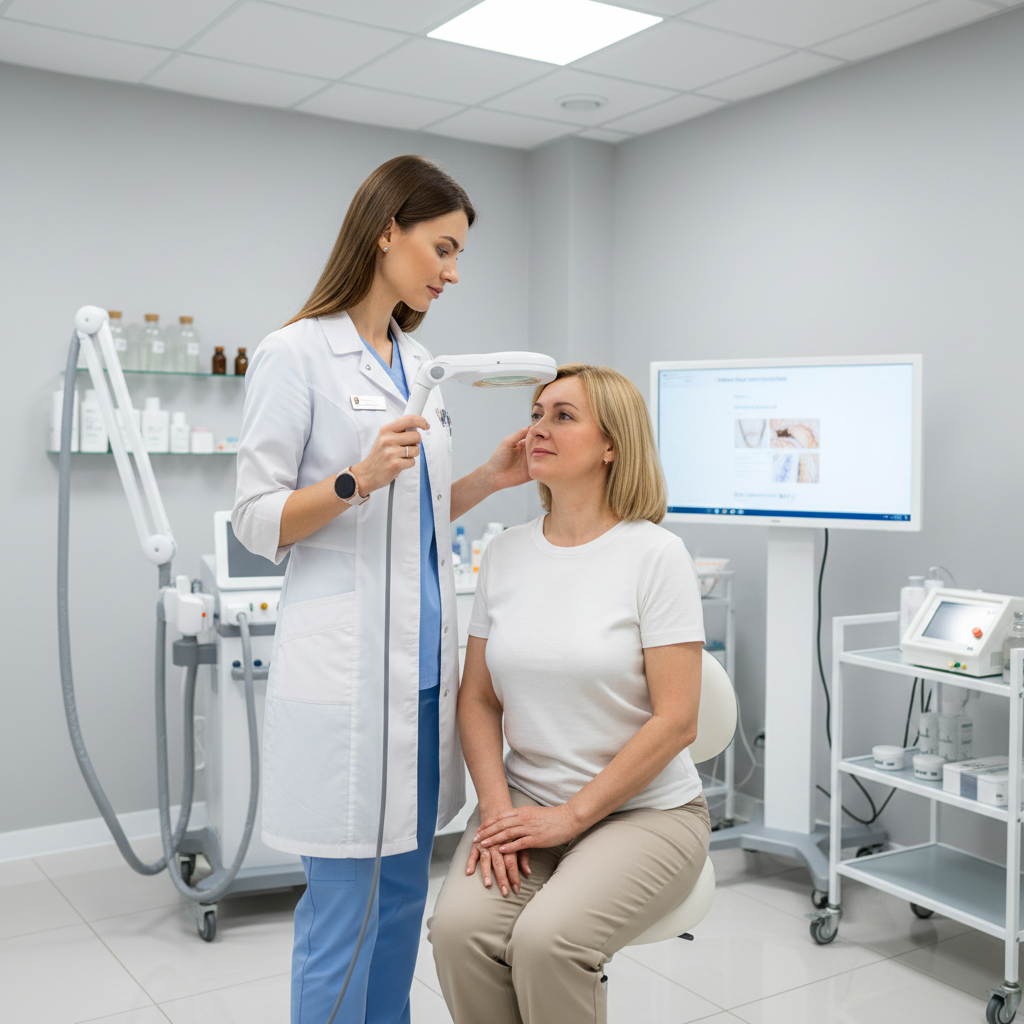
Dr. Yuki Nakamura
MD, FAAD · Stanford School of Medicine
"She spent forty minutes explaining exactly what was happening to my skin. I left with a real plan, not just a prescription."
— Priya S., verified patient
Board-certified means the bar was actually cleared.
The term "dermatologist" is used loosely online. A board-certified dermatologist has completed a minimum of four years of residency training and passed a rigorous written and oral exam administered by the American Board of Dermatology. Every provider listed on Derm has cleared that bar — no exceptions.

Dr. Marcus Webb
MD, PhD · Johns Hopkins University
"He caught a dysplastic nevus I'd had for years. Clear, calm, no drama — just thorough."
— Daniel O., verified patient
Melasma and post-inflammatory hyperpigmentation are not the same condition.
Both cause dark patches. Both are more common in deeper skin tones. But they respond to completely different treatments — which is exactly why subspecialty matching matters. Applying a melasma protocol to PIH, or vice versa, can make either condition significantly worse.

Dr. Adaeze Okafor
MD, FAAD · Howard University College of Medicine
"Finally a doctor who understood how melasma behaves differently on darker skin tones. Game-changing."
— Jasmine W., verified patient
The ABCDE rule for moles is a starting point, not a diagnosis.
Asymmetry, Border irregularity, Color variation, Diameter over 6mm, Evolution over time — these are useful self-screening signals. But dermoscopy, the tool a trained dermatologist uses, can detect patterns invisible to the naked eye. Annual full-body skin checks catch melanoma at stage one, when survival rates exceed 98%.
Not sure which specialist
you actually need?
Answer six questions about your skin concern and we'll surface the right subspecialty — no medical jargon, no insurance lookup required.